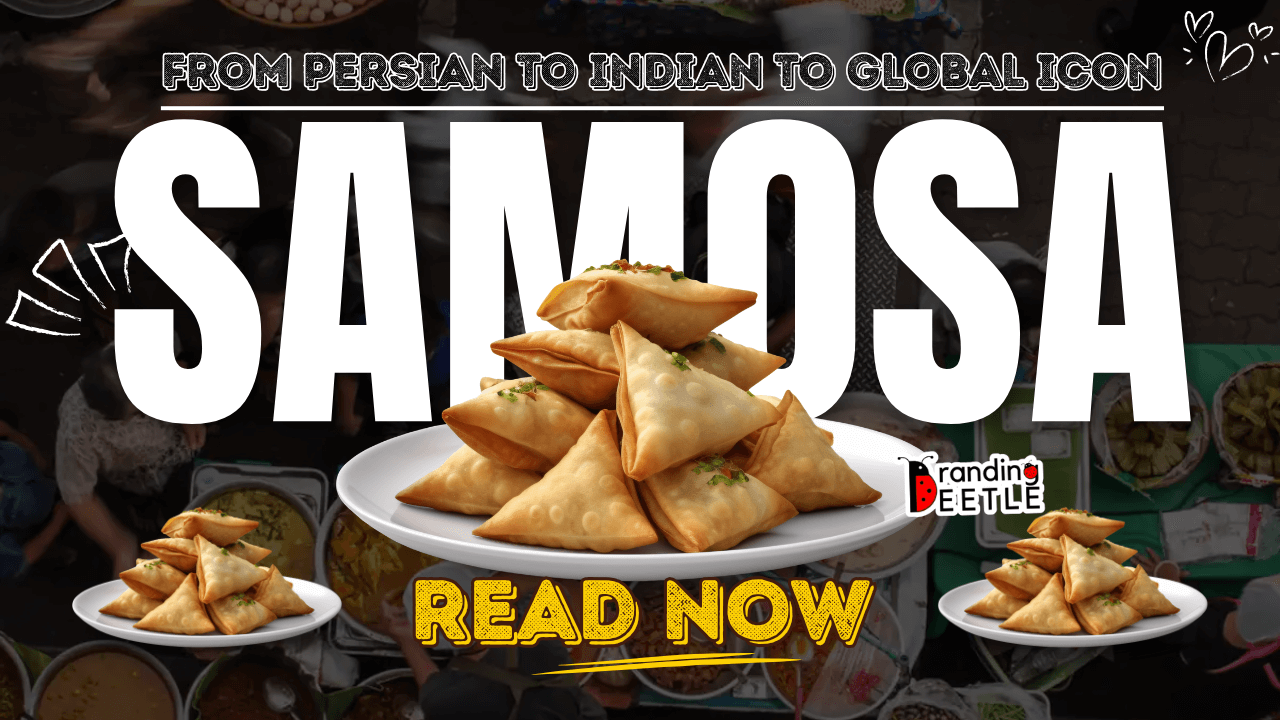



What if I told you that one of the greatest branding case studies of all time isn’t a tech company, luxury brand, or startup—but a humble triangle of fried dough?
Yes, I’m talking about the samosa.
📜 The Origins: Persia to India
The samosa (originally called sambosa or sambusak) began its journey in the Middle East and Central Asia. Brought to India around the 13th century by Persian traders and travelers, it was initially a meat-filled delicacy enjoyed by royalty.
But India did what it does best—embraced it, transformed it, and made it its own.
The potatoes, peas, spices, and deep-fried love that now define the Indian samosa are nowhere in the original. The transformation was not just culinary—it was cultural.
🔑 The Unintentional Brand
The samosa never had:
- A logo
- A tagline
- A founder’s pitch deck
Yet it became instantly recognizable and emotionally resonant. Why?
Because it followed the perfect playbook for modern branding, even if by accident:
💡 Branding Lessons from the Samosa:
1. Localization is Key (A core marketing principle)
- The original sambosa was meat-based, often elite.
- India turned it vegetarian with potatoes, peas, spices—and made it affordable.
- It adapted to local tastes, religions (vegetarian-friendly), and economic structures (cost-effective street food).
- In brand terms, it localized the product while keeping the original structure (triangle, fried shell).
Thesis alignment: Glocalization — Think global, act local.
2. Unintentional Branding through Consistency
- The samosa never had a brand ambassador or logo. But it had:
Thesis alignment: Brand experience theory — a brand is a perception formed by repeated, consistent experiences.
3. Cultural Embedding > Marketing
- It became a part of Indian rituals:
- Without formal campaigns, the culture itself marketed it.
Thesis alignment: Cultural Branding by Douglas Holt — where culture becomes the vehicle for branding, not advertisements.
4. Social Proof & Virality Before Social Media
- Samosa’s fame spread by travel, trade, and word of mouth, especially with Indian diaspora.
- Indian restaurants abroad made it a staple.
- It became an identifier of Indian food, like sushi is for Japan or tacos for Mexico.
Thesis alignment: Diffusion of Innovation (Everett Rogers) — samosa passed from early adopters (royalty) to mass market (commoners) over time and geography.
5. Adaptability = Long-Term Branding
- The samosa isn’t static.
Thesis alignment: Agile Branding — adapting to changing consumer behavior while keeping core identity.
🧠 So, what’s really behind the samosa’s rise?
It’s a combination of:
- Cultural resonance
- Emotional value
- Affordability
- Adaptability
- Global exposure via diaspora
All of this, without a single rupee spent on ads. Samosa is literally the word-of-mouth legend that every brand wishes it could be.
📈 So, what can businesses learn?
At Branding Beetle, we believe real branding isn’t about a pretty logo. It’s about earning a place in people’s lives.
The samosa is proof:
- Solve a genuine need (hunger, comfort)
- Deliver it reliably and memorably
- Let people do the talking
If you’re building a product, ask yourself: Is your brand living in people’s minds—or their hearts?
And maybe… grab a samosa while you think about it. 😄
👉 Want to explore brand strategy that doesn’t feel like strategy? Let’s talk.

Add comment